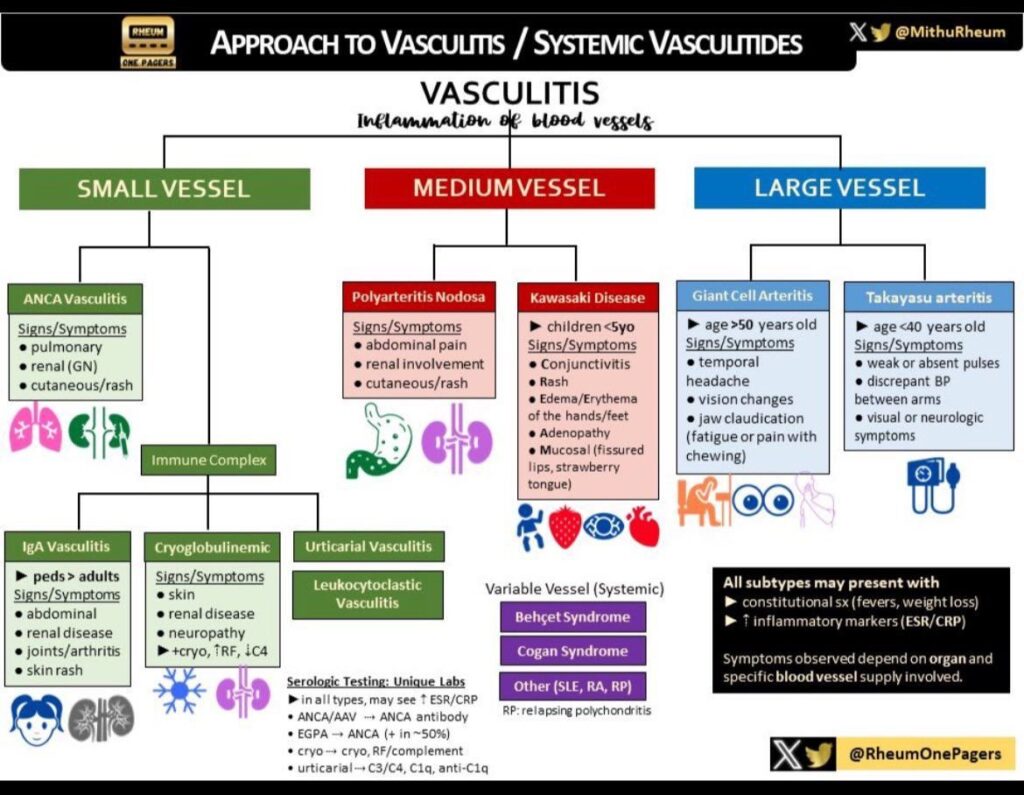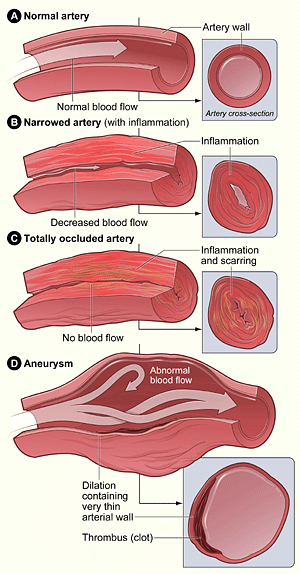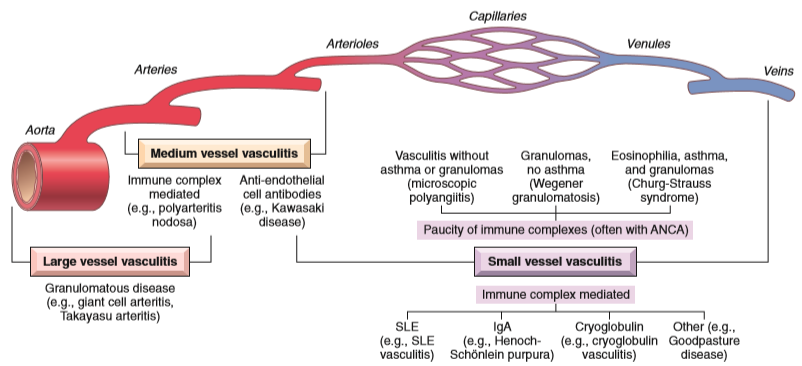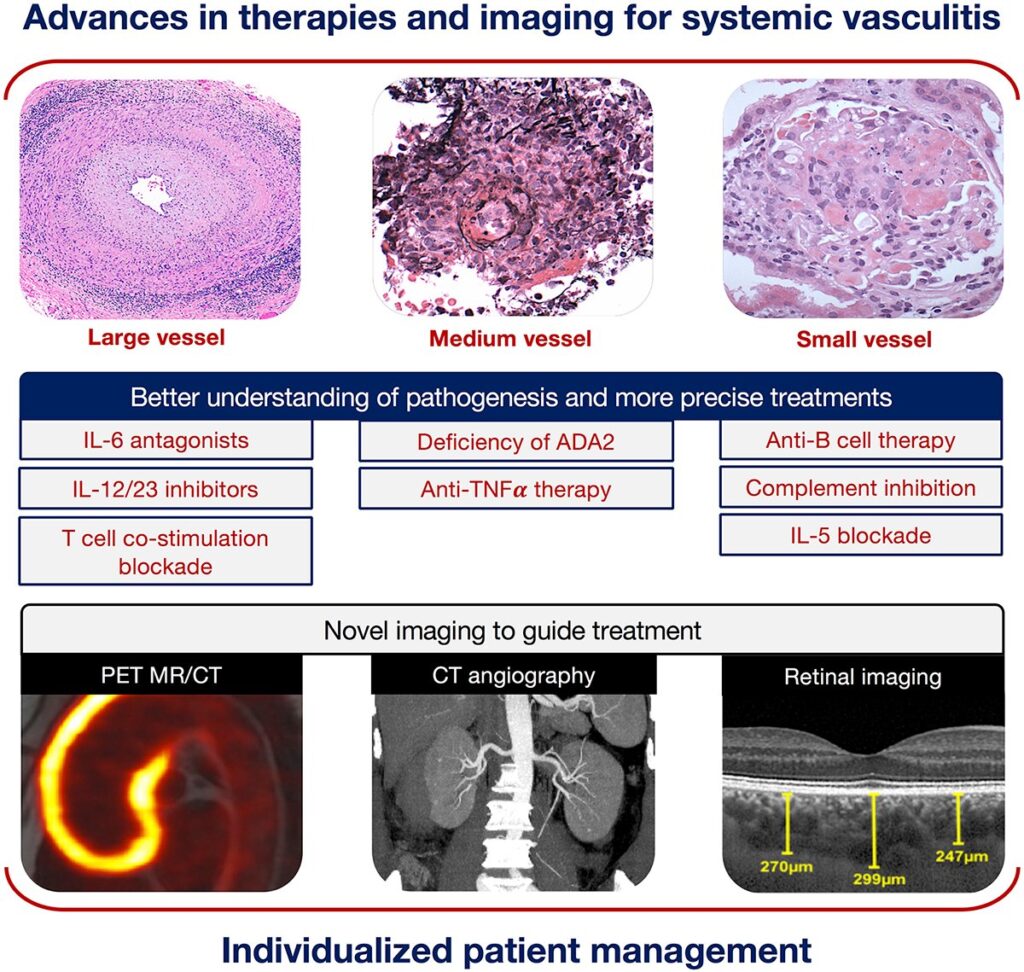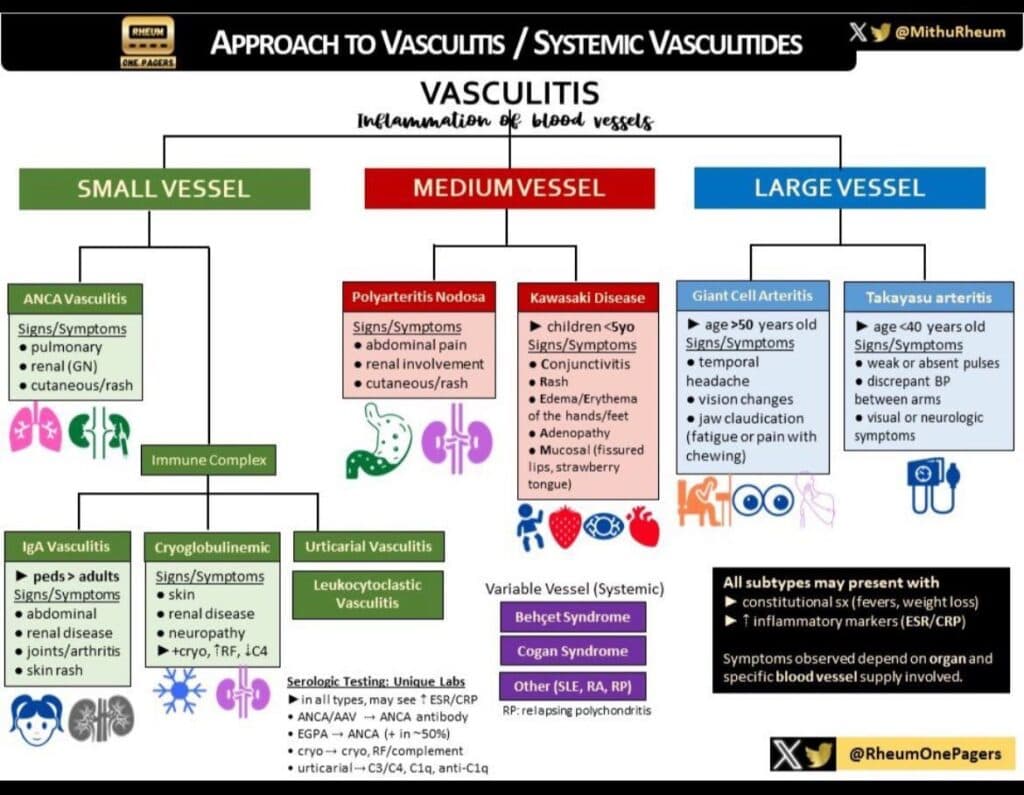
Vasculitis reaches cardiology from several directions at once: as a cause of accelerated atherosclerosis, as a differential in unexplained aortitis or coronary aneurysm, and as a systemic disease whose treatment carries its own cardiovascular cost. The figures below set out how the vasculitides are classified and where each one sits in the vascular tree.
Classification by vessel size
The Chapel Hill consensus organises primary vasculitis by the calibre of the vessel involved, and that division still drives the diagnostic approach:
- Large-vessel. Giant cell arteritis and Takayasu arteritis. Aorta and its major branches; presentation ranges from claudication and pulse deficit to aortic regurgitation and aneurysm.
- Medium-vessel. Polyarteritis nodosa and Kawasaki disease. Coronary aneurysm is the cardiological signature here.
- Small-vessel. ANCA-associated (granulomatosis with polyangiitis, microscopic polyangiitis, eosinophilic granulomatosis with polyangiitis) and immune-complex mediated forms. Cardiac involvement is more often myocardial or pericardial than coronary.