kardio.az

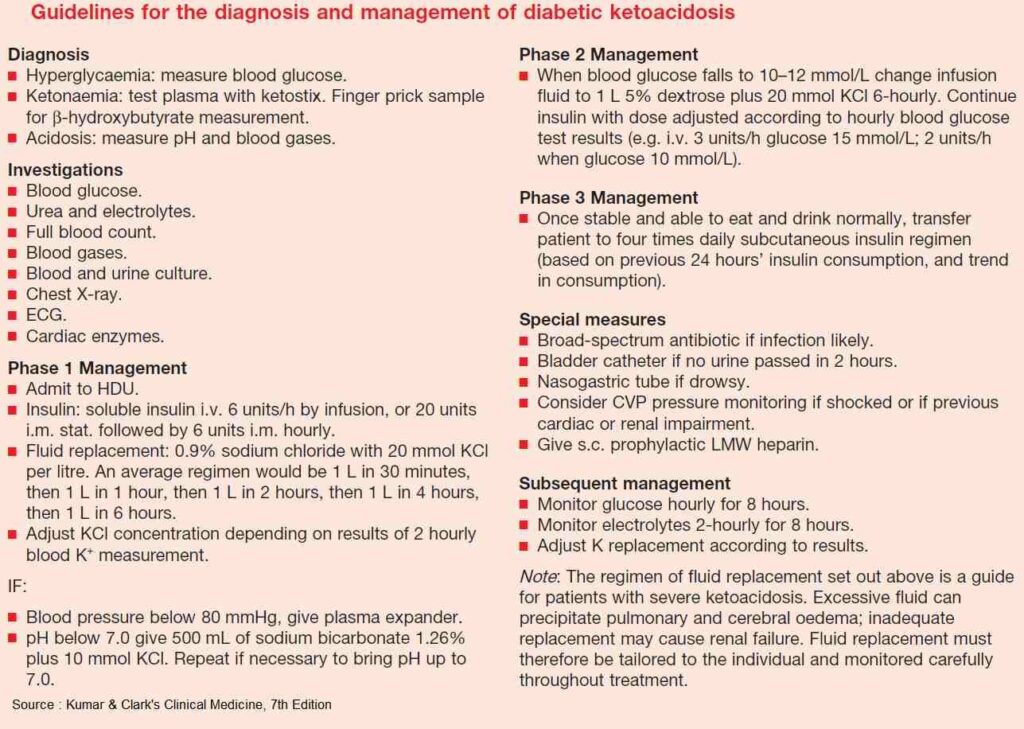
Guidelines for the diagnosis and management of diabetic ketoacidosis

Dr. Kənan Əhmədov2 dəq oxu
Guidelines for the diagnosis and management of diabetic ketoacidosis

Diabetic ketoacidosis is an endocrine emergency that lands in cardiology more often than the textbook suggests — through arrhythmia from potassium shifts, through the ECG changes that follow them, and through patients whose presenting complaint is chest pain or breathlessness. The summaries below cover diagnosis, the treatment timeline and the traps.

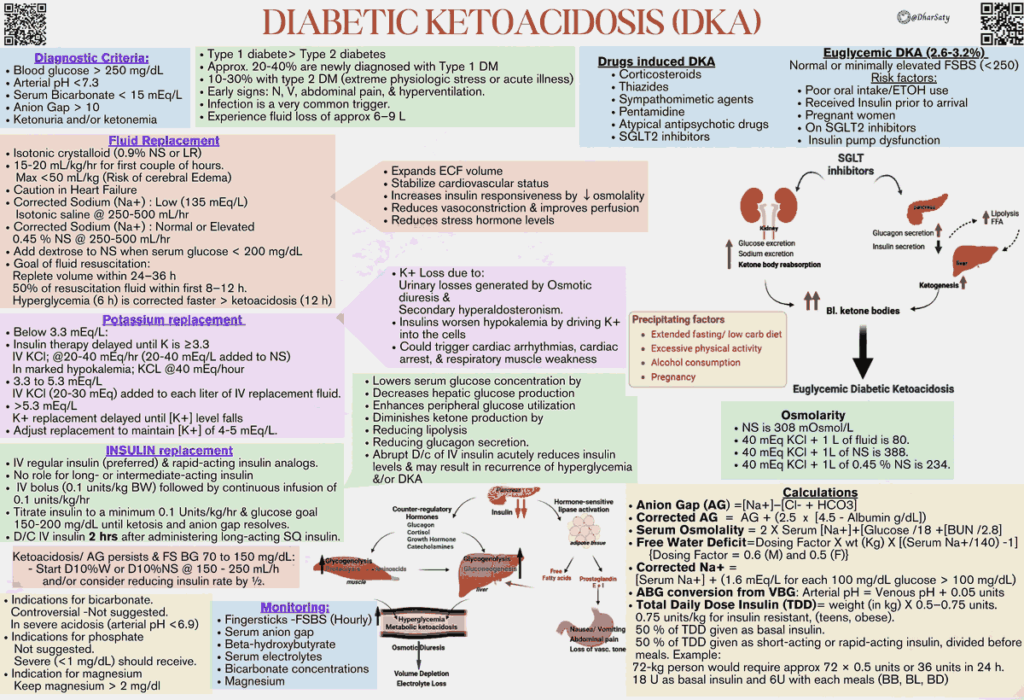
The diagnostic triad

DKA is defined by hyperglycaemia, ketosis and metabolic acidosis with an increased anion gap. Blood ketone measurement is preferred to urine ketones where available, because urine testing reflects an earlier metabolic state and lags behind treatment. Euglycaemic DKA — in pregnancy, in patients on SGLT2 inhibitors, or after prolonged fasting — is the presentation most often missed, since glucose may be near normal.
Treatment priorities, in order

  1. Fluid resuscitation first. Volume deficit is usually substantial and correcting it lowers glucose before insulin has acted.
  2. Potassium before insulin. Total body potassium is depleted even when serum potassium reads normal or high. Insulin drives potassium intracellularly; giving it to a hypokalaemic patient risks arrhythmia. Replace first if potassium is below the threshold, and monitor throughout.
  3. Fixed-rate insulin infusion, with glucose added to the fluids once plasma glucose falls, so the infusion can continue until the ketosis and acidosis have cleared rather than until the glucose is normal.
  4. Treat the precipitant. Infection, myocardial infarction, missed insulin doses and new-onset diabetes account for most episodes. In older patients, an ECG and troponin are worth taking early.
  5. Bicarbonate is rarely indicated and is reserved for severe acidosis under specialist guidance.

Resolution

Resolution is defined biochemically — ketones and acidosis corrected — not by glucose alone. Transition to subcutaneous insulin should overlap with the infusion; stopping the infusion before the subcutaneous dose has taken effect is a common cause of relapse.

Sources: the JBDS-IP guideline on the management of DKA in adults, the Starship paediatric DKA guideline, and the Medscape treatment overview linked below.

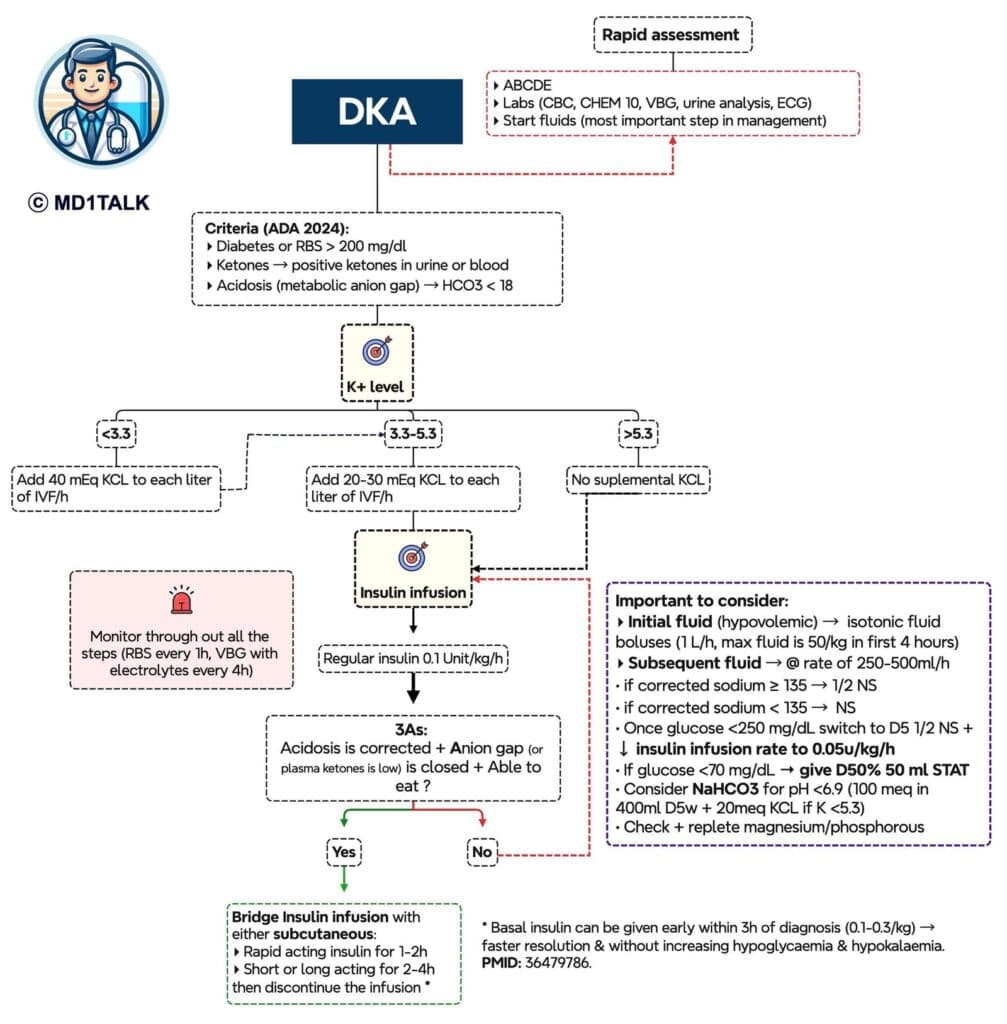
Diabetic ketoacidosis — diagnostic criteria and management overview
Diabetic ketoacidosis (DKA) summary — diagnosis, fluids, potassium and insulin
Guidelines for the diagnosis and management of diabetic ketoacidosis
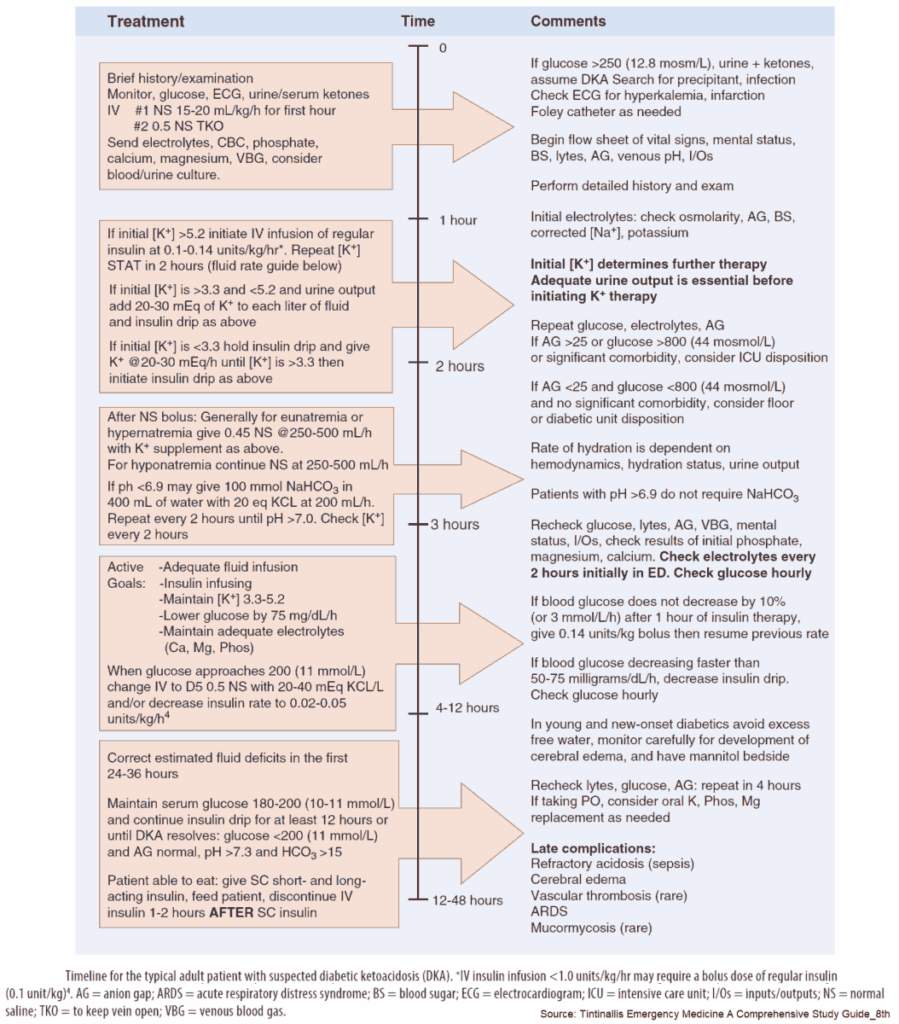
Timeline for treatment of suspected diabetic ketoacidosis (DKA) — hour by hour management

https://emedicine.medscape.com/article/118361-treatment?form=fpf

https://abcd.care/sites/default/files/site_uploads/JBDS_Guidelines_Current/JBDS_02_DKA_Guideline_with_QR_code_March_2023.pdf

https://starship.org.nz/guidelines/diabetic-ketoacidosis-dka-management

Şərhlər

İlk şərhi siz yazın

Şərh yazın

Şərhlər dərc olunmazdan əvvəl yoxlanılır. E-poçtunuz göstərilmir.