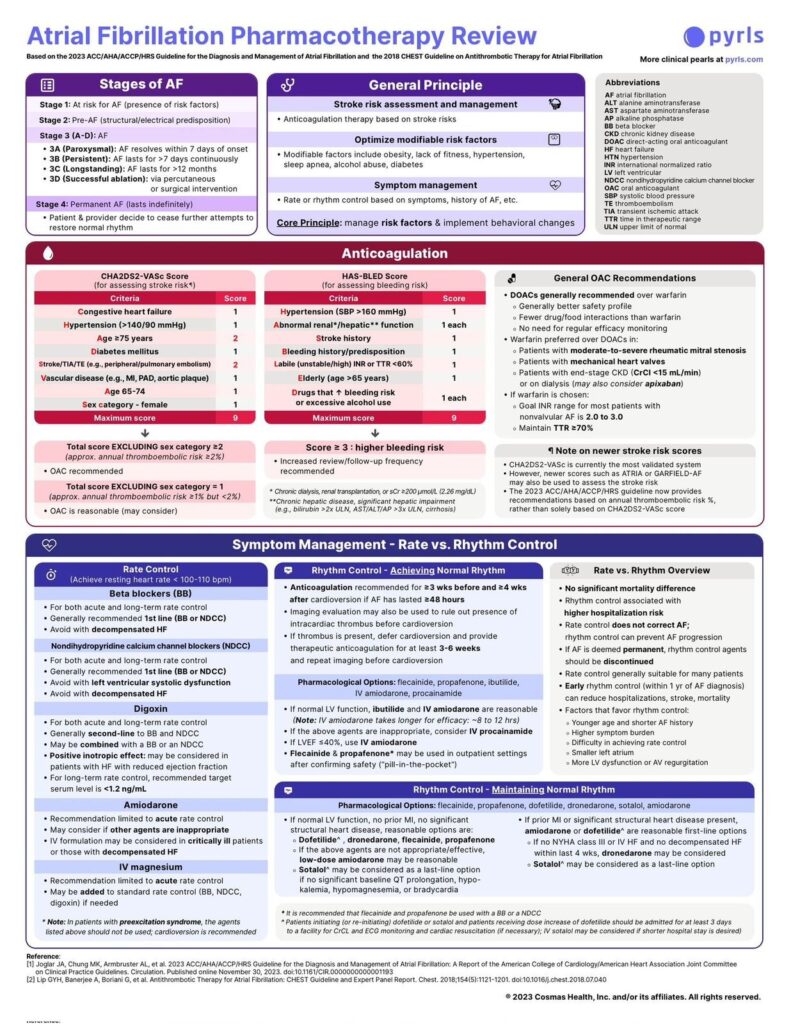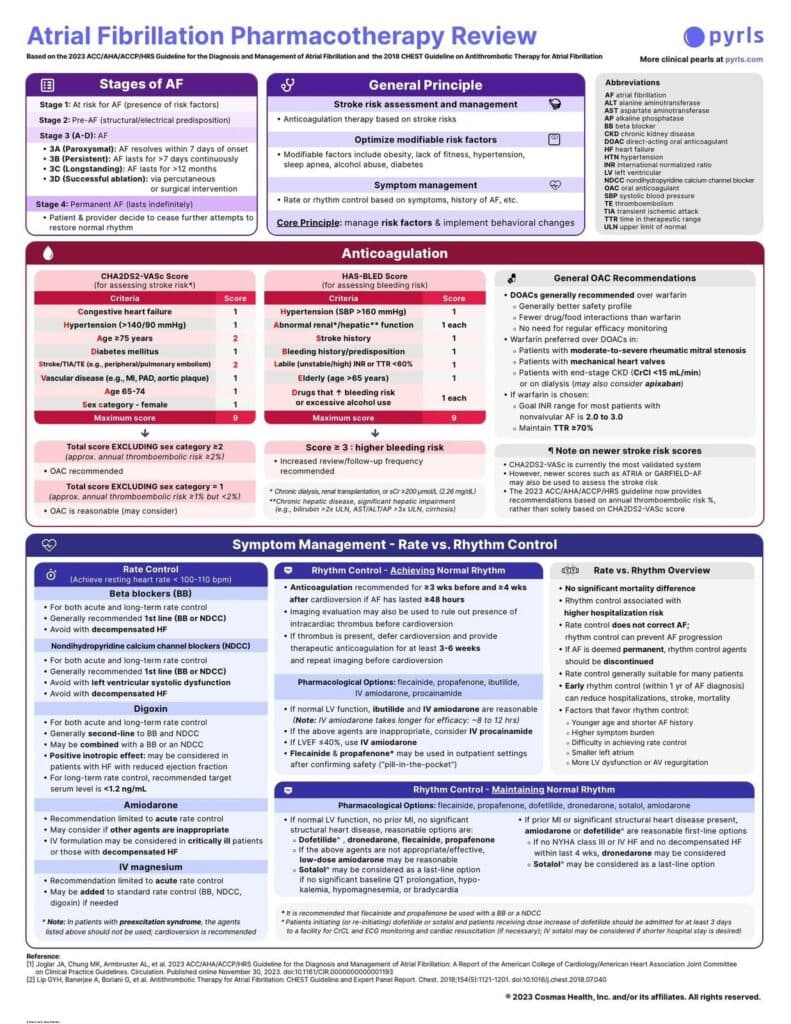
Atrial fibrillation management has moved a long way from “rate or rhythm”. The 2023 ACC/AHA/ACCP/HRS guideline reframes AF as a staged disease and puts risk factor modification alongside anticoagulation and symptom control rather than after them. The review below summarises that approach on a single page.
Staging
AF is now described in four stages: at risk (risk factors present), pre-AF (structural or electrical predisposition), clinical AF — subdivided into paroxysmal, persistent, long-standing persistent and successfully ablated — and permanent AF, where patient and clinician agree to stop attempting rhythm restoration. Staging matters because the intervention that helps most differs by stage.
Anticoagulation
Stroke risk is assessed with CHA₂DS₂-VASc and bleeding risk with HAS-BLED. DOACs are generally preferred over warfarin: better safety profile, fewer interactions, no routine monitoring. Warfarin remains the agent of choice in moderate-to-severe rheumatic mitral stenosis, in mechanical heart valves, and in end-stage chronic kidney disease or dialysis. Where warfarin is used, the goal is an INR of 2.0 to 3.0 with time in therapeutic range above 70 percent.